
Near Net Zero Apartments in London – Whetstone Green
Client: MKM Developments
Location: Whetstone Green, London
Sector: Residential / Property Development
Services: EPC Strategy, Solar PV Design & Installation, Energy Modelling, Low-Carbon Systems Integration
Project Summary
Flint Energy has delivered a pioneering near net zero apartment development in London, setting a new benchmark for low-carbon residential buildings in the UK.
By combining advanced solar PV technology with smart energy distribution and thermal storage, Flint Energy created a world-leading solution that more than doubles on-site solar usage, significantly reducing both energy bills and carbon emissions for residents.
This project demonstrates how integrated renewable energy systems can unlock real-world performance — not just theoretical compliance.
The Challenge
Apartment buildings traditionally struggle to maximise the benefits of solar PV. In standard systems:
Solar generation is typically underutilised
Self-consumption averages around 40%
Multiple inverters are required per building
Excess energy is exported to the grid rather than used on-site
For MKM Developments, the goal was to go beyond standard compliance and create:
EPC A-rated apartments
A genuinely future-ready, all-electric development
A solution that delivers long-term operational savings for residents
Flint Energy’s Solution
Flint Energy was appointed at the design stage to lead the energy strategy and deliver an integrated low-carbon system.
Working with partners Allume Energy, Sunamp and MyEnergi, Flint designed and installed a bespoke technology stack including:
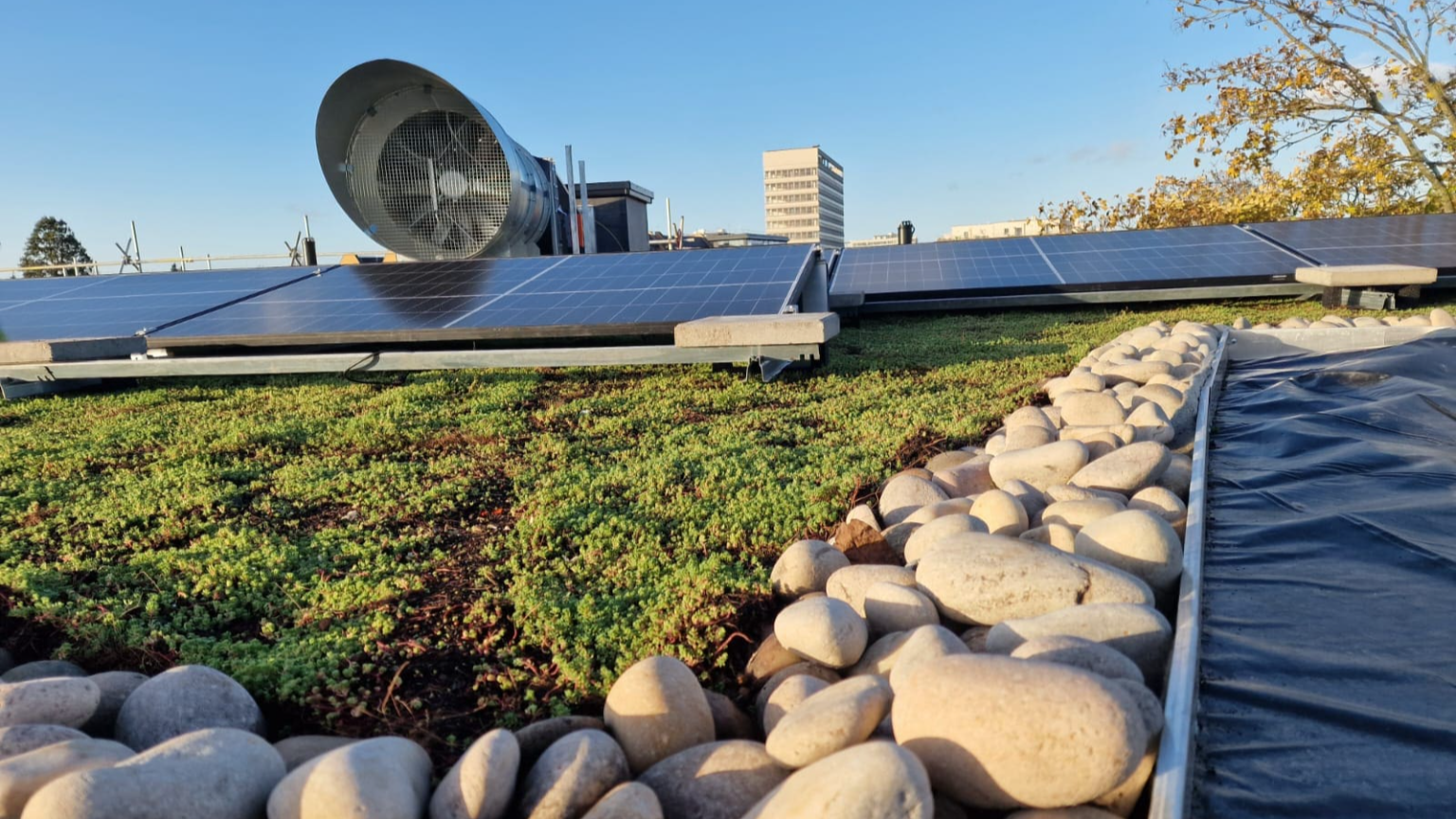
40kWp Solar PV System
A roof-mounted 40kWp solar PV installation serving all 20 apartments plus landlord supply.
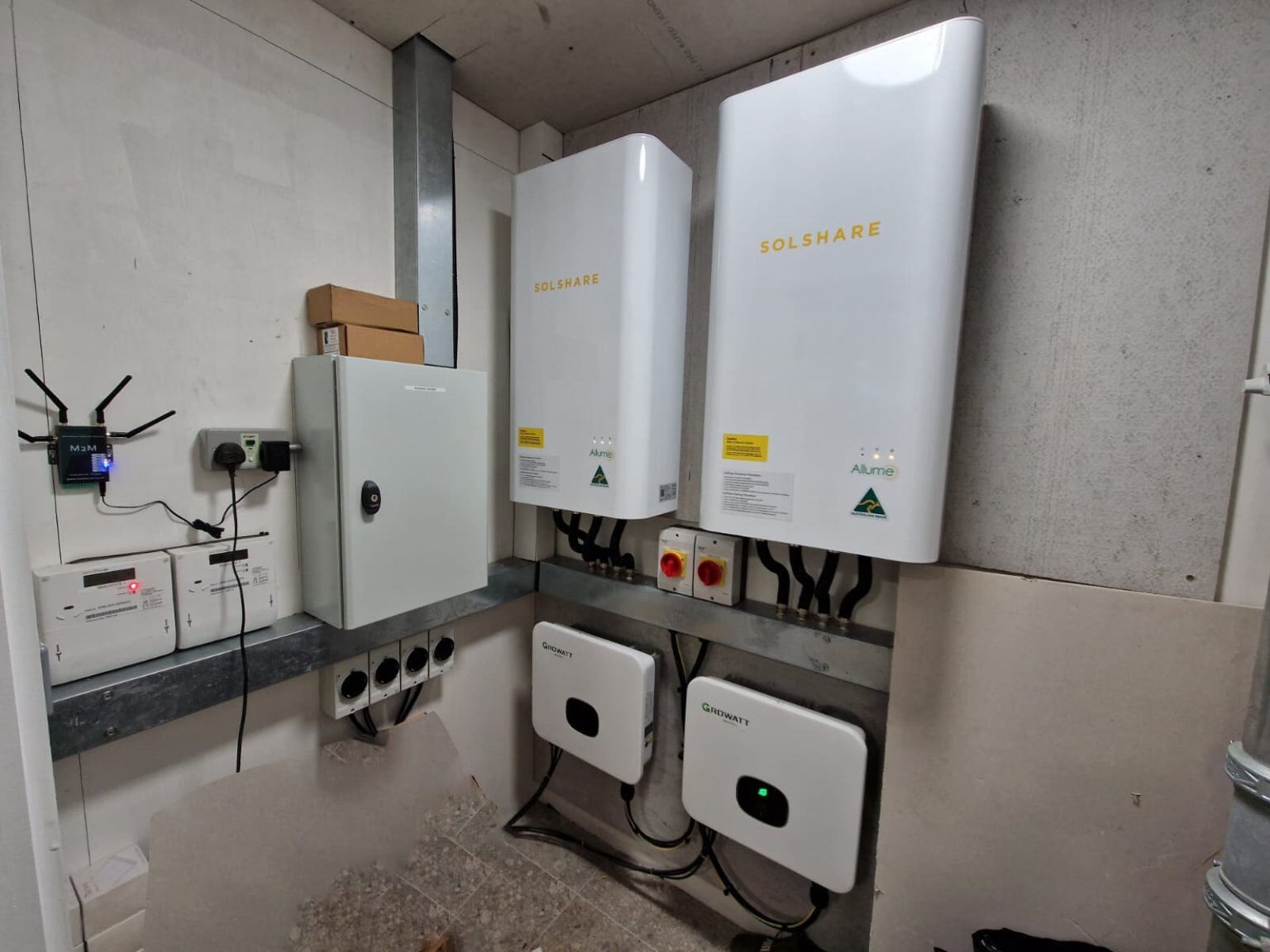
Allume SolShare (UK First Integration)
Instead of using 21 individual inverters, Flint deployed Allume’s SolShare, enabling:
Just 2 inverters for the entire building
Real-time solar sharing across all flats
Solar directed to where demand exists at any moment
This increased on-site solar self-consumption from ~40% to 50–70%.
Sunamp Thermal Heat Batteries
As the building is fully electric, hot water demand represented a major energy load. Flint integrated Sunamp thermal batteries to store excess solar energy as heat.
MyEnergi Eddi Solar Diverters
Excess PV generation is automatically diverted into the Sunamp systems, allowing residents to use stored solar energy for hot water later — even when the sun isn’t shining.
Results & Performance
This integrated system achieves something rare in residential developments:
100% On-Site Solar Utilisation
All solar energy generated is either:
used instantly by residents, or
stored for later use as hot water
Key Outcomes
EPC A-rated apartments
Near net zero operational performance
Solar self-consumption increased to up to 100%
Dramatic reduction in grid dependency
Significant long-term energy bill savings for residents
Improved finance and planning viability for the developer
Client Testimonial
“As a developer, we are proud to be bringing such a progressive scheme to the market. We have proactively worked with the various elements to bring the latest technology to the scheme and we’re thrilled with the results.”
Why This Project Matters
Whetstone Green demonstrates what is possible when energy systems are:
designed at concept stage
integrated holistically
focused on real performance, not just compliance
Rather than treating solar, storage and heating as separate systems, Flint Energy delivered a fully joined-up energy strategy — one that maximises on-site renewable usage and delivers tangible benefits for both developers and residents.
This project stands as a blueprint for future near net zero apartment buildings in the UK.
Technical Details
Whenever solar energy is being generated, the SolShare will direct it to the flats to cover their instantaneous energy demands from appliances, devices, lights etc. By doing this, each flat minimises its grid energy usage and maximises its energy bill savings. Solar consumption in SolarShare solar PV systems has already been improved from 40% to 50-70% with this optimized delivery.
This project takes it one step further by using a PV diverter to direct any unused solar energy into a Sunamp heat battery charging it for use. Residents can then use this stored energy, in the form of hot water, at a time that suits them. As a result, residents’ energy bills are even lower since they are relying less on the grid.